
Masonry
Chimney Repair and Restoration
A damaged chimney leads to structural problems and safety risks, and it usually starts quietly. Whether the issue is cracked mortar, deteriorated flashing, or ordinary weathering, timely repair protects both the chimney and everything underneath it.
Signs you may need chimney repair
Chimneys take constant weather from every direction. Small problems often go unnoticed until they cause water damage, heat loss, or structural movement. These are the indicators worth acting on:
Cracks in the brick or crown
Visible cracking lets water in and accelerates deterioration, and can lead to shifting over time.
Loose, missing, or damaged flashing
Flashing that has lifted or gone missing exposes the joint between chimney and roof — a small gap is enough.
Water stains or moisture indoors
Spots, bubbling paint, or discoloration near the chimney usually mean water is already getting through.
Rusted or corroded metal
Rust on flashing or the damper is direct evidence of moisture, and it weakens the assembly around it.
Damp smells near the fireplace
Odors or a damp feeling point to hidden moisture, which leads to mold and mortar breakdown.
Protecting the rest of the house
Your chimney shields the house from the elements, but minor issues like damaged flashing or failed mortar joints turn into serious structural problems when water reaches the roof deck, the walls, and the interior.
We address the underlying cause rather than the symptom, which is the only way to keep the repair from coming back.
Local experience matters
Northern Virginia homes face seasonal swings that are hard on masonry — freeze-thaw cycles work on any joint that is already compromised. We know how local weather and aging construction materials interact, and we build repairs accordingly.
The repairs we carry out
Most chimneys need one or two of these rather than all of them, and a scope that lists everything is worth a second opinion:
Repointing
Failed mortar joints raked back to sound material and replaced, matched in color and joint profile to the existing work.
Crown repair or recasting
A cracked or undersized crown rebuilt with proper slope, overhang, and a drip edge so water is thrown clear of the brickwork.
Flashing repair and replacement
The roof-to-chimney joint resealed and detailed correctly — the most common single source of a ceiling stain near a fireplace.
Brick replacement
Spalled or cracked units cut out and replaced individually rather than skimmed over with mortar.
Partial rebuild
Where deterioration has gone past repair, the affected section taken down to sound masonry and rebuilt.
Waterproofing
A breathable repellent applied where it is appropriate, which sheds water while still letting the masonry dry outward.
Matching mortar to the chimney you have
Mortar is not one product, and using the wrong one does real damage. Older brick is softer than modern brick and was laid with a softer lime-based mortar that was intended to move slightly and to fail before the brick does — mortar is the sacrificial part of the wall by design.
Repointing an older chimney with a modern high-strength mix produces joints harder than the brick around them. The assembly still has to move, so instead of the mortar giving, the faces of the brick spall off. It is a common and expensive mistake, and it is why we match the mortar to what is already there rather than defaulting to the strongest bag available.
How the work runs
Chimney Repair, step by step
Every job follows the same sequence. You are told which stage you are at and what happens next.
Inspection from the ground and the roof
A chimney has to be looked at from above to be assessed honestly. We check the crown, the flashing, the joint at the roofline, and the condition of the mortar on every face.
Trace the water path
Almost every chimney problem is water finding a way in. Before scoping a repair we work out where it is entering, because repairing the symptom leaves the leak in place.
Written scope
You get an itemized estimate that says which parts need work now and which are worth watching. Chimneys are easy to over-scope, and we would rather be specific.
Repointing, crown, and flashing
Failed joints are raked and repointed, cracked or spalled brick is replaced, the crown is repaired or recast with a proper overhang and drip edge, and flashing is reset so the roof-to-chimney joint actually sheds water.
Rebuild where repair will not hold
Where deterioration has gone too far, the affected section is taken down and rebuilt rather than patched. We tell you which one you are looking at before we start.
Weatherproofing and cleanup
Where appropriate, a breathable water repellent goes on so masonry can still dry outward, and the roof and grounds are cleared of debris.
★★★★★
After some discussion we decided to have all of it repointed as well as just the necessary repairs. I must say that was the right choice as it looks great. All of the mortar joints were redone, a few cracked bricks were replaced, and the steps are once again complete and solid. Great work.
Questions
Frequently asked
What is a chimney crown, and why does it matter so much?
The crown is the sloped slab across the top of the chimney that sheds water away from the masonry below. When it cracks — and thin, poorly formed crowns crack early — water runs straight down inside the chimney structure. A large share of the chimney damage we are called out to look at started as a failed crown, which is why we assess it first.
How often does a chimney need repointing?
There is no fixed interval; it depends on exposure, the original mortar, and how much weather that face of the house takes. A chimney is the most exposed masonry on the building, so it almost always needs attention before the walls do. The practical answer is to look at it when you notice receding joints, spalling brick faces, or staining on the interior near the fireplace.
I have a stain on the ceiling near the chimney. Is that the chimney?
Often, and the usual culprit is flashing rather than the brickwork. Flashing is the metal that seals the joint between the chimney and the roof, and when it lifts, corrodes, or was poorly detailed to begin with, water gets in at exactly that point. It is worth looking at before you repaint, because the stain will come back.
Why does freeze-thaw damage matter here specifically?
Northern Virginia cycles above and below freezing repeatedly through a single winter rather than staying cold. Water that has soaked into a mortar joint expands each time it freezes and works the joint open a little more. That is why a small crack in November is a noticeably larger one by March, and why timing a repair before winter is worth doing.
Also from Onyx
Driveway Paving
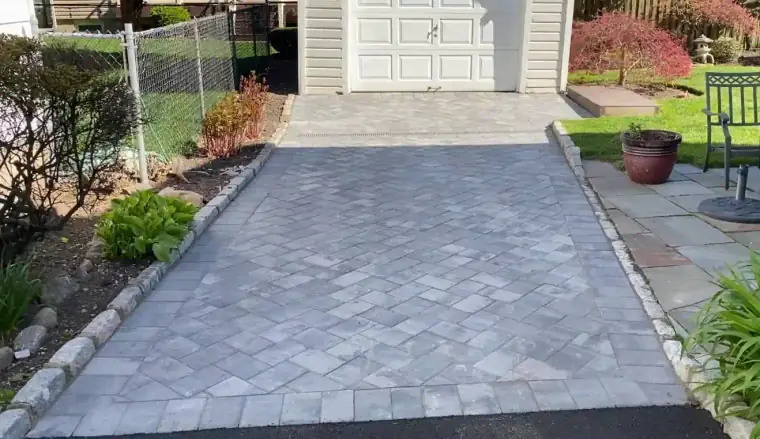
Asphalt, concrete, and paver driveways across Northern Virginia and DC. Base prep done right, every layer laid the way it should be.
Brickwork
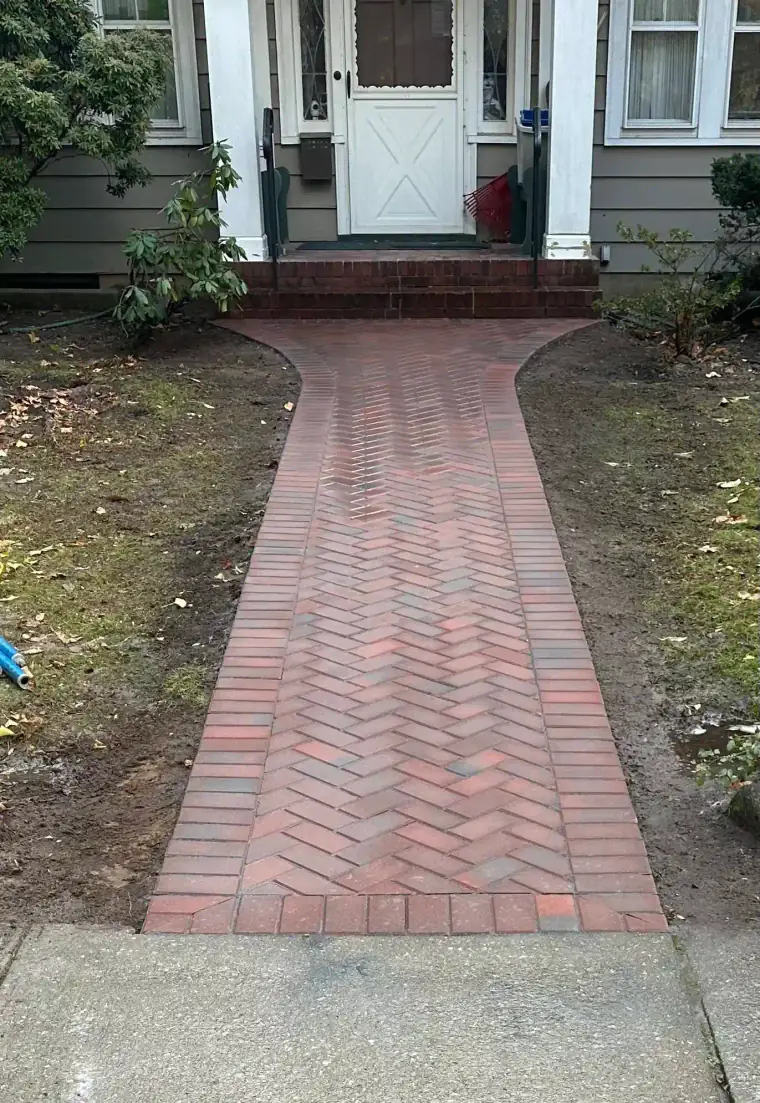
Brick patios, entryways, steps, facades, and repointing. Traditional technique, materials chosen to match what is already there.
Retaining Walls
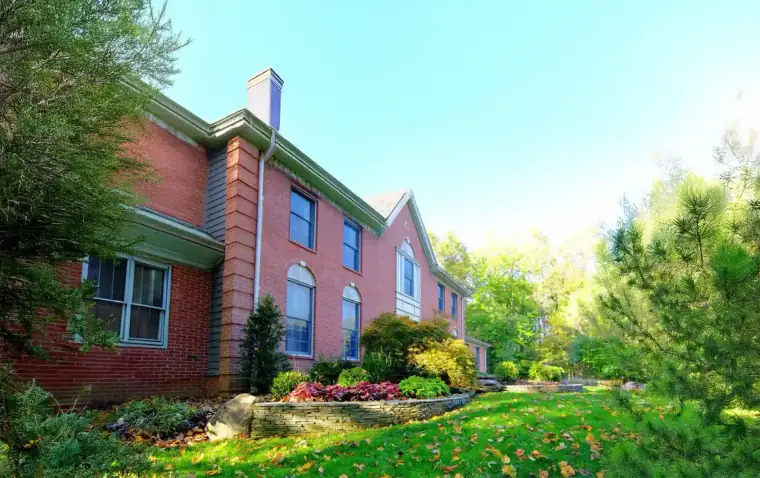
Natural stone and segmental block walls that hold back soil, stop erosion, and add real structure to a yard.
Service area
Estimates are free everywhere on this list. If you are just outside it, call and ask — we often can.