
Masonry
Driveway Paving and Installation
A professionally paved driveway does more than lift curb appeal — it improves safety, drainage, and the value of the property. Whether you are replacing a surface that has reached the end of its life or installing something new, the right materials and the right preparation make a difference you can see for decades.
3 to 5-year workmanship warranty
In writing, on every job we install.
- 3 years Asphalt driveways and paving
- 5 years Concrete driveways, patios, and walkways
- 5 years Paver patios, driveways, and walkways
Choose your material
Driveway Paving by material
Each one has its own page — what it costs, how it fails, and when it is genuinely the right answer.
Asphalt Driveways
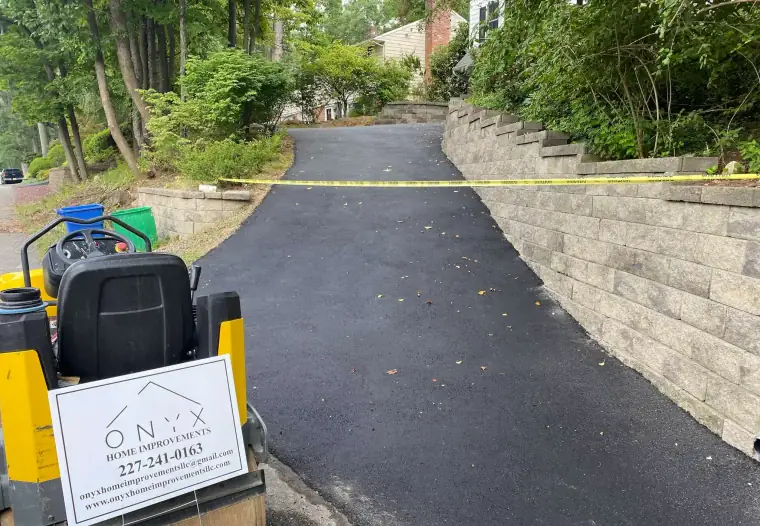
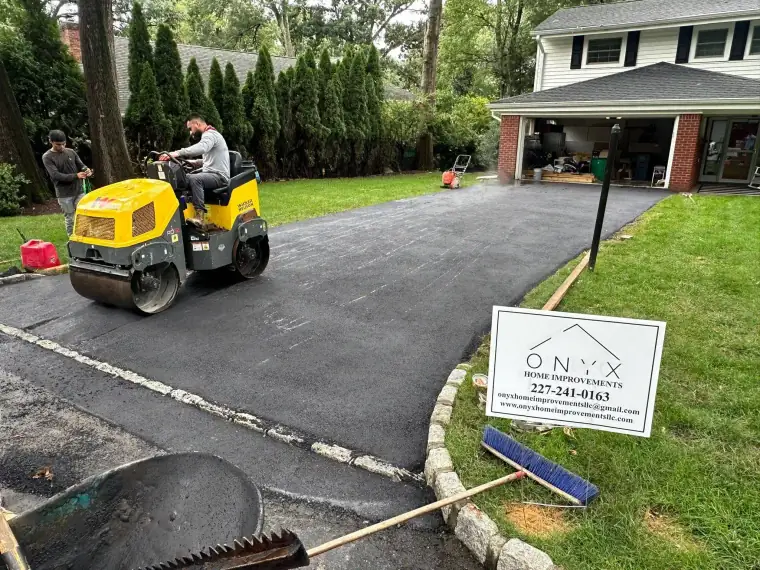
New asphalt driveways and full replacements. Torn out to depth, rebuilt on a compacted base, laid in lifts and rolled hot.
Learn more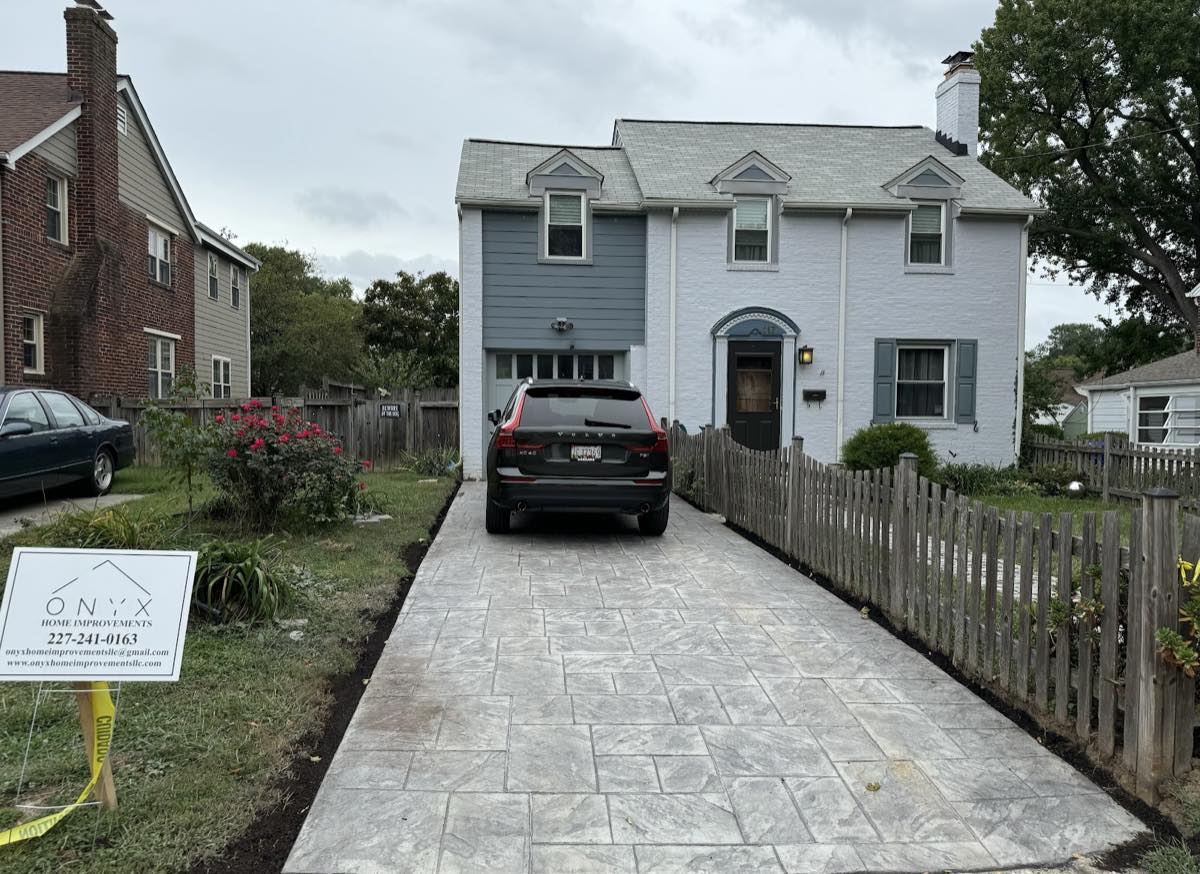
Concrete Driveways
Poured concrete driveways in broom, exposed aggregate, and stamped finishes — reinforced, jointed properly, and graded to drain.
Learn more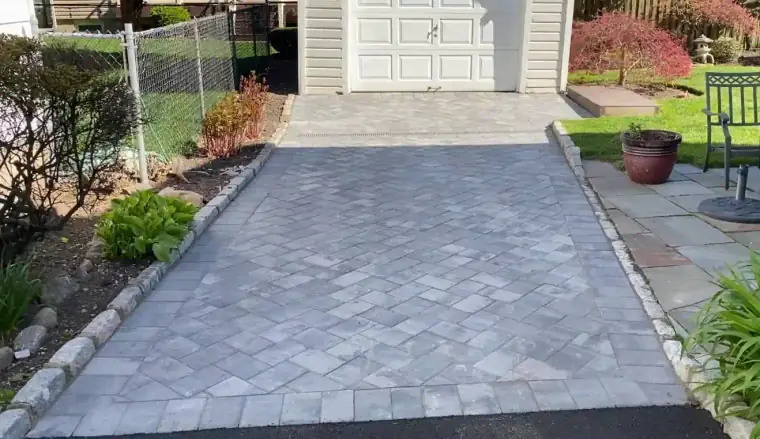
Paver Driveways
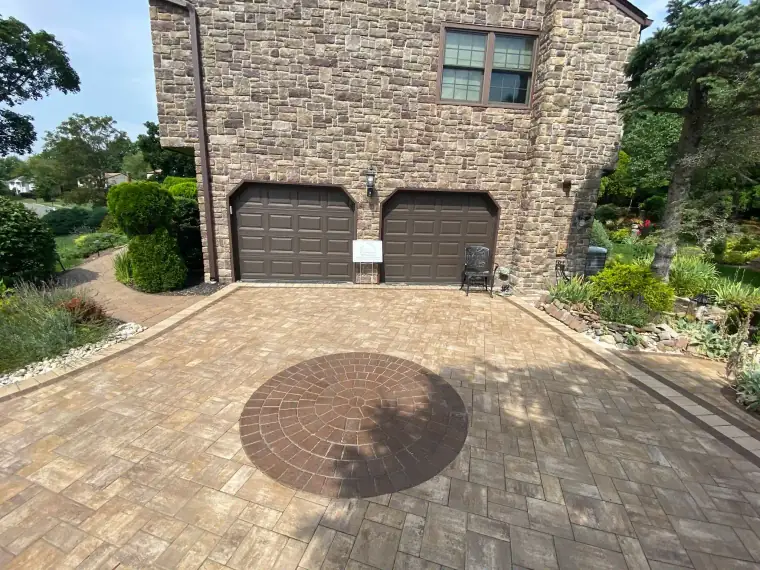
Interlocking paver driveways with borders, banding, and circular inlays. Set on a driveway-depth base, and repairable unit by unit.
Learn moreSigns it's time to repave
Even a well-built driveway shows its age eventually. Cracking, potholes, water pooling after rain, and a faded, brittle surface all point toward repaving rather than patching. Uneven areas are not only unattractive — they become trip hazards and collect standing water.
Once a driveway is past the point of minor repair, a new surface gives you a smoother, safer approach to the house and a chance to correct the drainage problems that shortened the life of the old one.
Choosing between asphalt, concrete, and pavers
The material decides the up-front price, the look, and how the driveway ages — and each of the three has a situation it is genuinely the right answer for. We walk through all three against your site, your budget, and how much maintenance you actually want to do, rather than steering you toward one by default. Each has its own page above if you want the detail.
Asphalt
Least expensive up front and fastest to install. Flexes with the ground rather than cracking against it, and can be resurfaced later rather than replaced. Wants sealcoating every few years.
Concrete
The cleanest uniform surface, and the one that takes finishes — broom, exposed aggregate, or stamped. Longer-lived than asphalt and lower maintenance, but rigid, so it needs a better base and honest control joints.
Pavers
The only surface that repairs invisibly: individual units lift out and go back after a utility trench, a stain, or a settled area. Highest up-front cost, and the widest range of patterns, borders, and inlays.
Built to hold up to daily use
Every driveway we build starts with site preparation — excavation, a compacted aggregate base, and attention to how water will leave the surface. Skipping that step is the most common reason driveways fail early, and it is the step you can never go back and fix.
From base prep through precision finishing, each stage gets the same attention. The result is a surface built for daily traffic and Northern Virginia freeze-thaw cycles.
How the work runs
Driveway Paving, step by step
Every job follows the same sequence. You are told which stage you are at and what happens next.
Site visit and written estimate
We walk the driveway with you, look at how water currently leaves it, check access for equipment, and measure. You get an itemized written price before anything is scheduled.
Excavation
The old surface comes out and we dig to the depth the new surface has to carry. Skipping depth here is the single most common reason a driveway fails early, and it cannot be corrected later.
Base and compaction
Aggregate goes in and is compacted in lifts rather than all at once. Compaction is what stops the settling you see as dips and low spots a few winters in.
Grading for drainage
Pitch is set so water runs off the surface and away from the house and garage, not toward them. If the old driveway had a drainage problem, this is the stage where it gets corrected.
Surface installation
Asphalt is laid hot and rolled, or pavers are set, cut to the edges, and locked in. Either way the finish work happens on a base that is already right.
Edging, jointing, and cleanup
Edge restraint goes in, paver joints are swept and compacted, and the site is cleaned. We walk the finished job with you before we leave.
Recent work
Driveway Paving projects
Recent driveway paving jobs, each with its own page. Photographs are our own work.
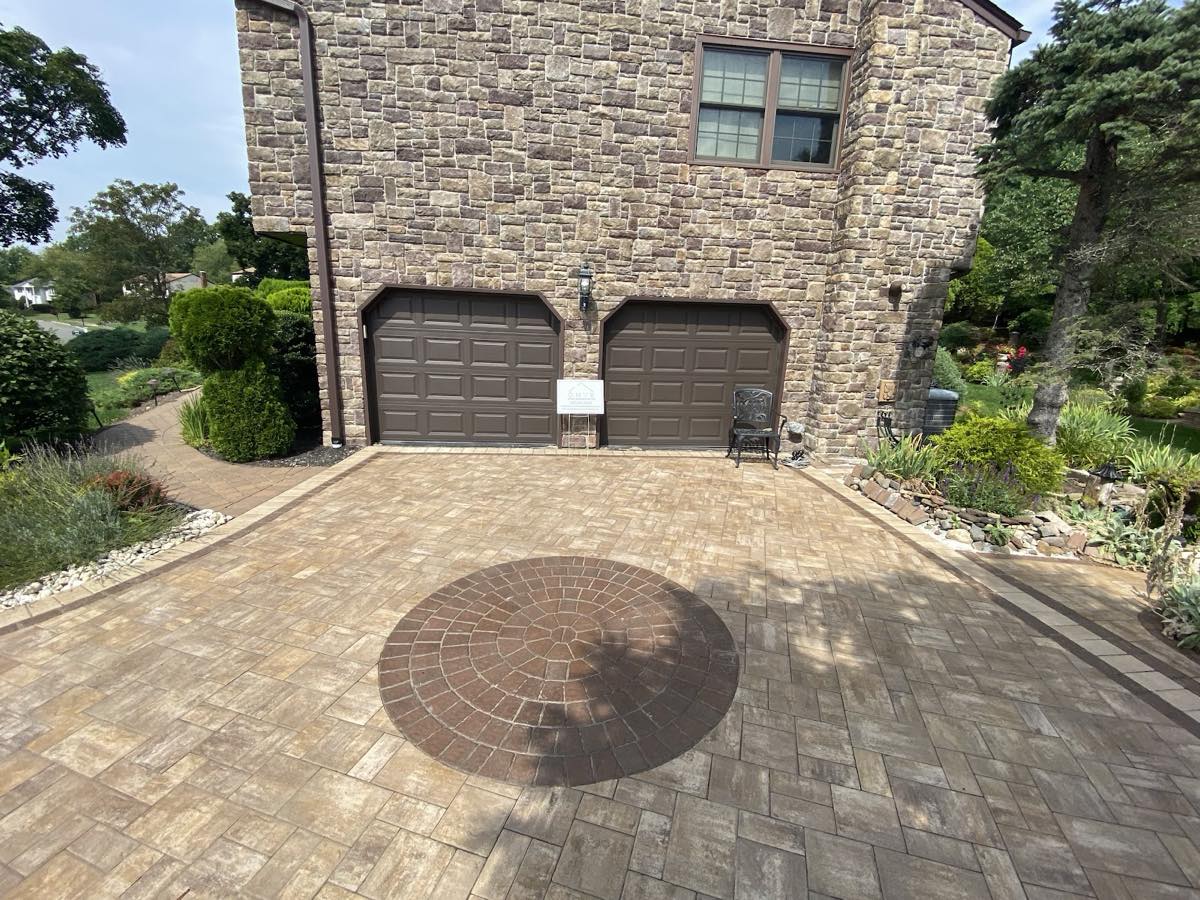
Paver Driveway with Circular Medallion
Interlocking pavers
Stamped Concrete Driveway
Stamped concrete
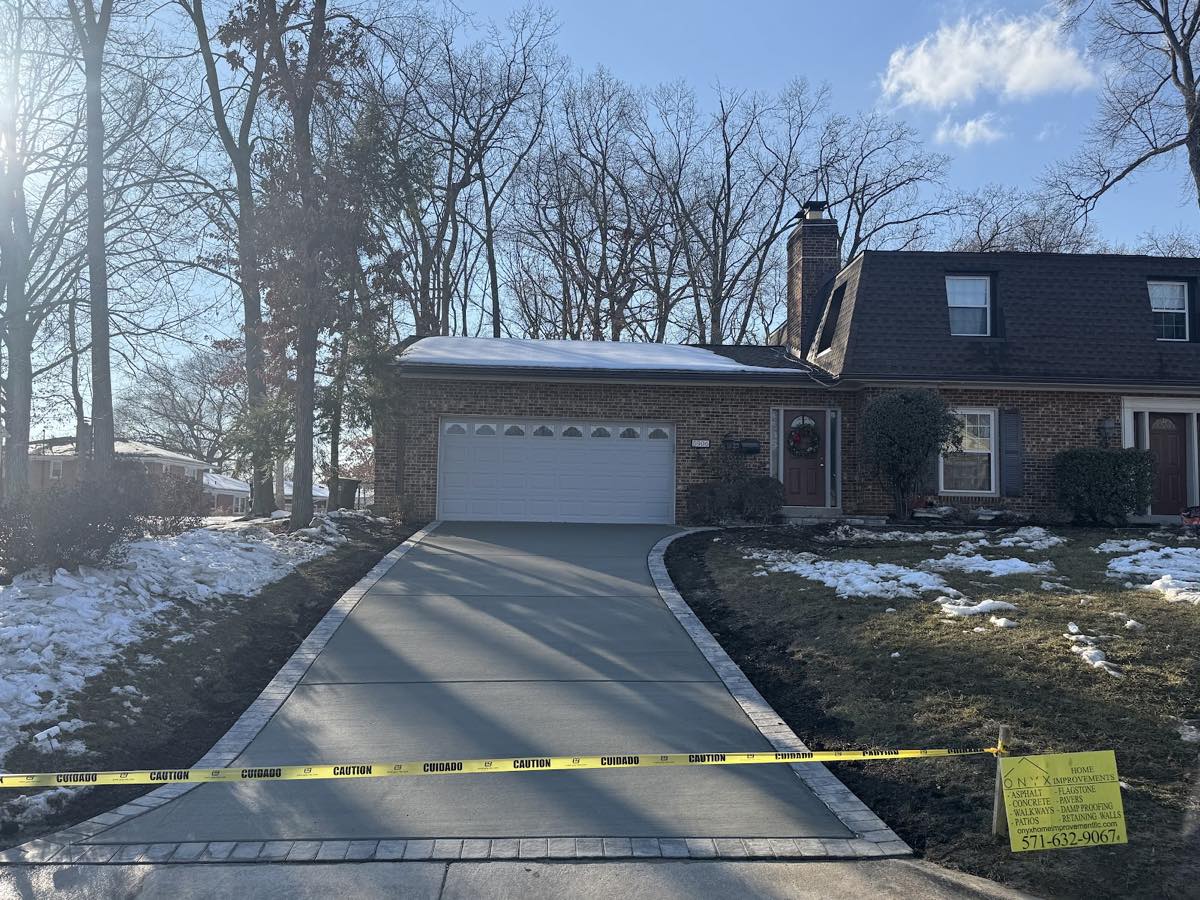
Concrete Driveway with Paver Border
Concrete with paver edging
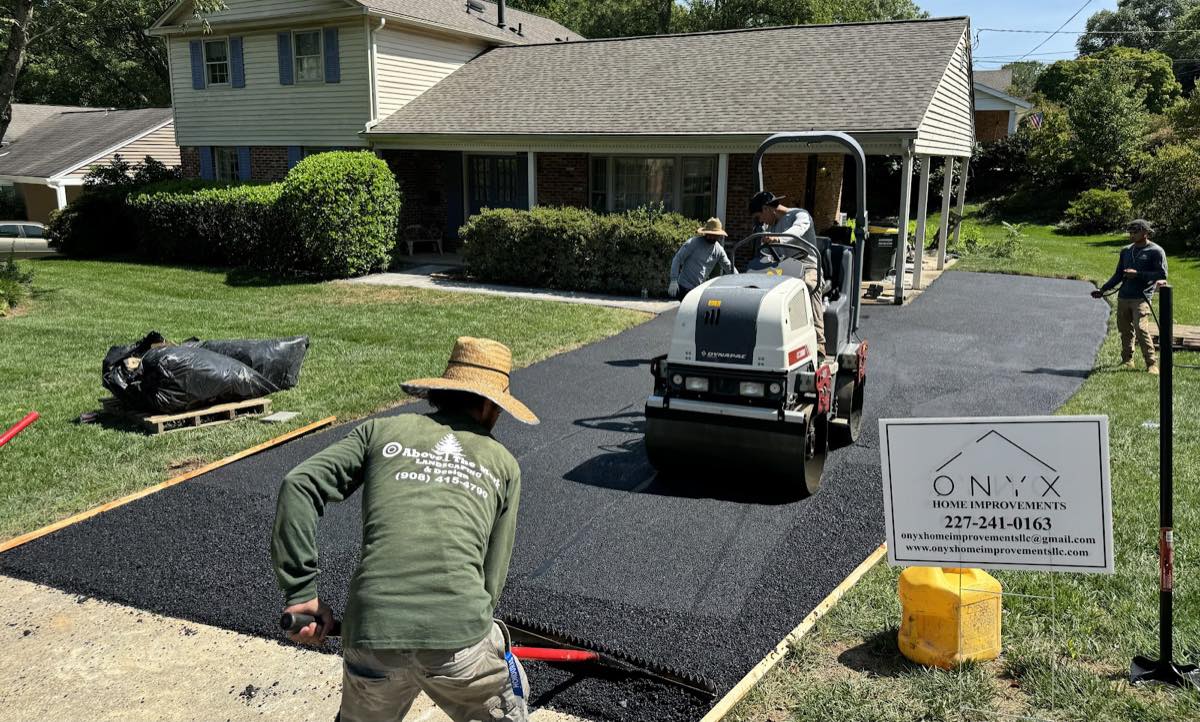
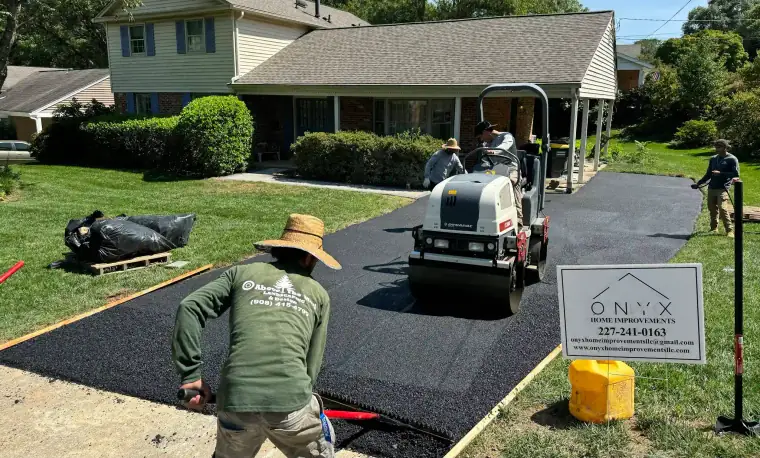
Asphalt Driveway Replacement
Asphalt
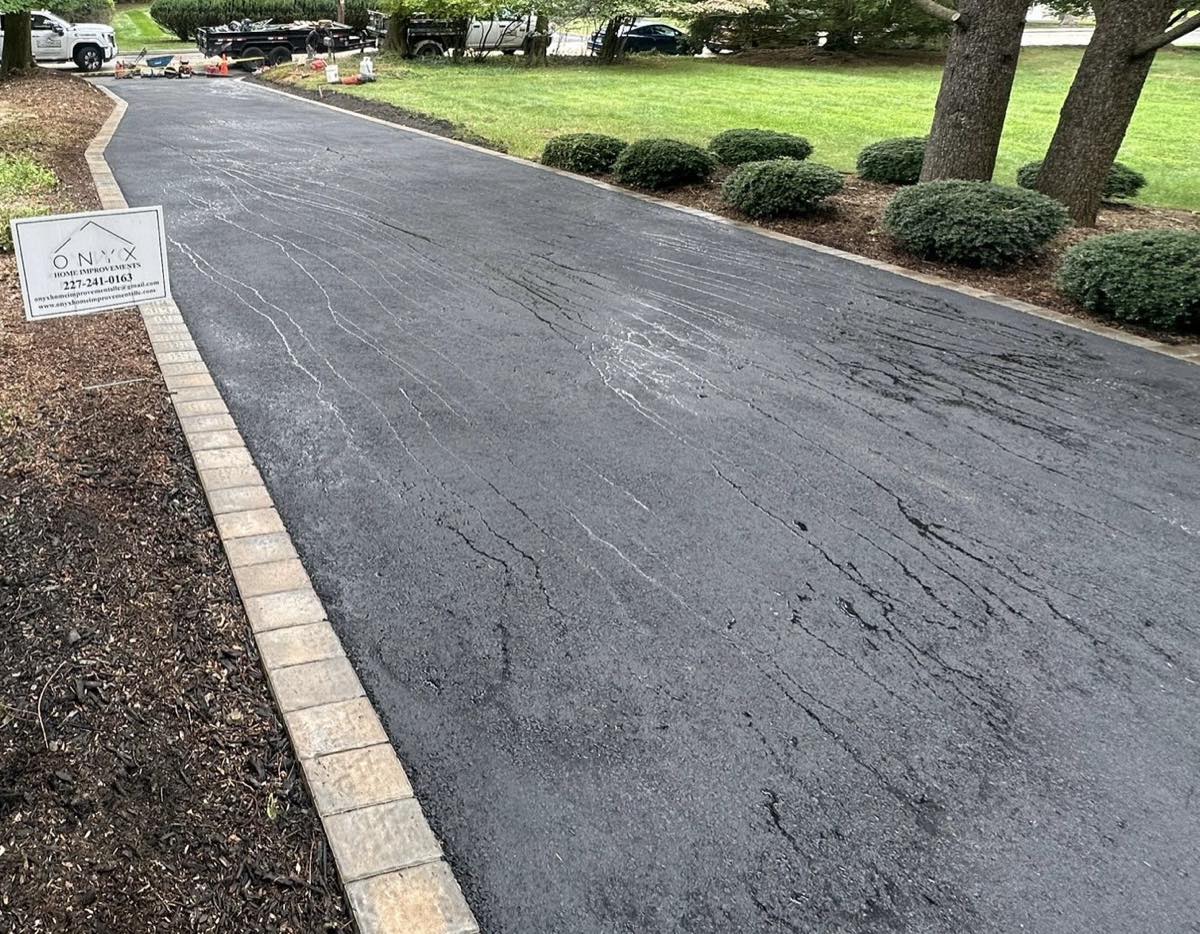
Asphalt Driveway with Paver Border
Asphalt with paver edging
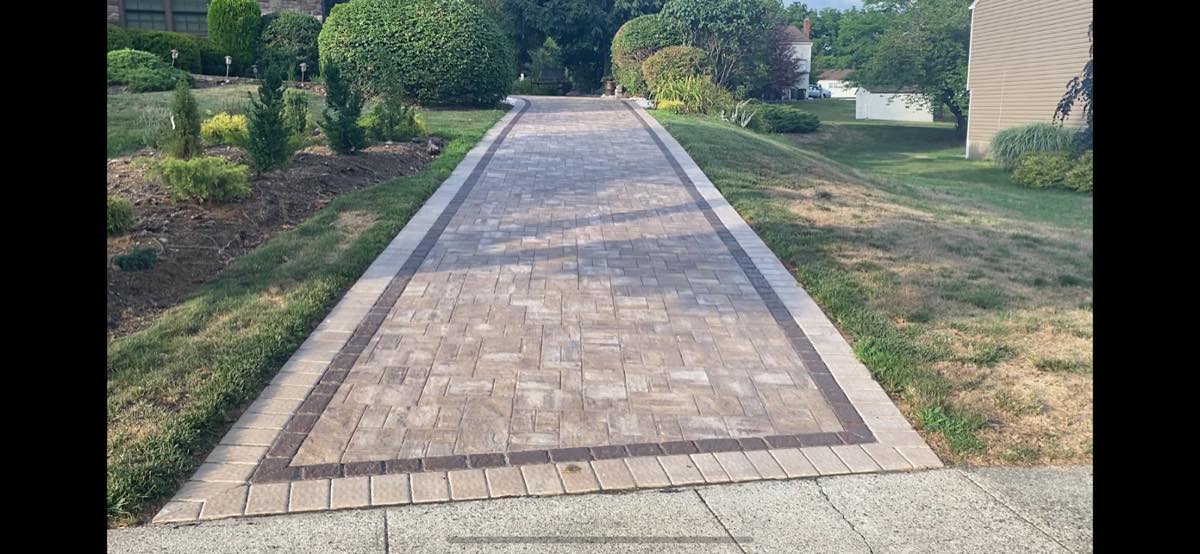
Paver Walkway with Soldier Border
Interlocking pavers
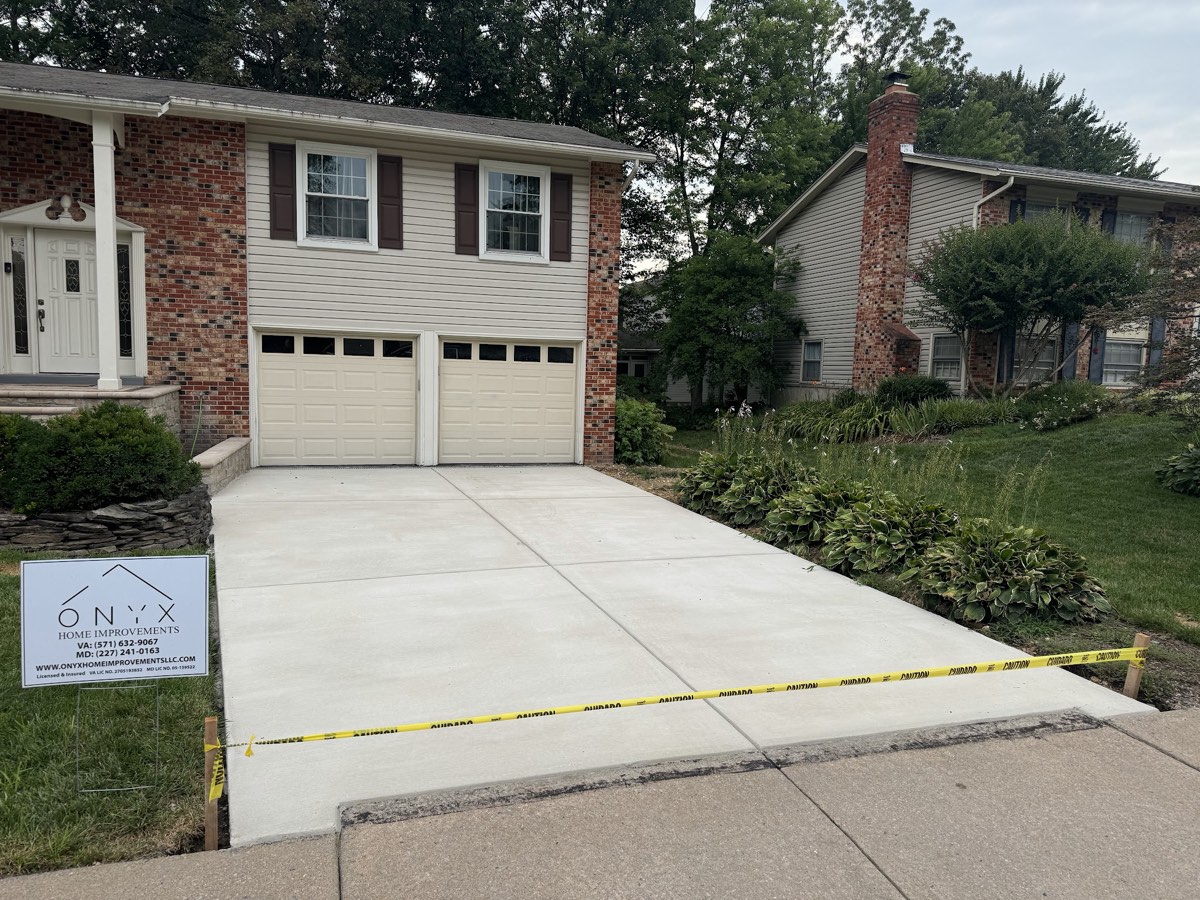
Broom-Finished Concrete Driveway
Poured concrete
Driveway Paving photographs
★★★★★
We had our driveway repaved and it looks great. These brothers are delightful. Highly recommend for your next project.
Questions
Frequently asked
How long does a new driveway take?
A typical residential replacement runs three to five days from excavation to finished surface. Larger or steeper driveways, poor access, and drainage correction all add time. Weather is the biggest variable — asphalt in particular cannot be laid properly in the wet or the cold, and we would rather wait a few days than lay a surface that will not hold.
Should I choose asphalt, pavers, or concrete?
Asphalt is the least expensive up front, goes down fastest, and is straightforward to resurface later. Pavers cost more initially but individual units lift out and go back without a patch mark, so repairs and utility work do not leave scars. Concrete sits between the two and gives the cleanest uniform surface.
We walk through all three against your site, your budget, and how much maintenance you actually want to do — rather than steering you toward one by default.
Can you pave over the existing driveway?
Sometimes, but usually it is a false economy. Overlaying leaves whatever caused the original failure in place underneath, so cracks reflect back through the new surface, often within a couple of seasons. If the base is sound and the problem is genuinely surface-level, we will tell you an overlay is reasonable. More often, the honest answer is that the base is the problem.
When can I drive on it?
A paver driveway is ready as soon as the edging and jointing are finished. New asphalt needs to cure — light traffic after a day or two, and we ask you to keep heavy vehicles and sharp turning off it for longer than that, especially in hot weather. We give you specific timing for your job when we finish.
Will you fix the drainage that ruined the old driveway?
Yes, and we will raise it whether or not you ask. Water is the reason most paving fails early. If the grading around your driveway is sending water the wrong way, replacing the surface without correcting it just buys you a few years before the same failure repeats. It goes in the estimate as a line item so you can see what it costs.
Also from Onyx
Asphalt Driveways
New asphalt driveways and full replacements. Torn out to depth, rebuilt on a compacted base, laid in lifts and rolled hot.
Concrete Driveways
Poured concrete driveways in broom, exposed aggregate, and stamped finishes — reinforced, jointed properly, and graded to drain.
Paver Driveways
Interlocking paver driveways with borders, banding, and circular inlays. Set on a driveway-depth base, and repairable unit by unit.
Service area
Estimates are free everywhere on this list. If you are just outside it, call and ask — we often can.