
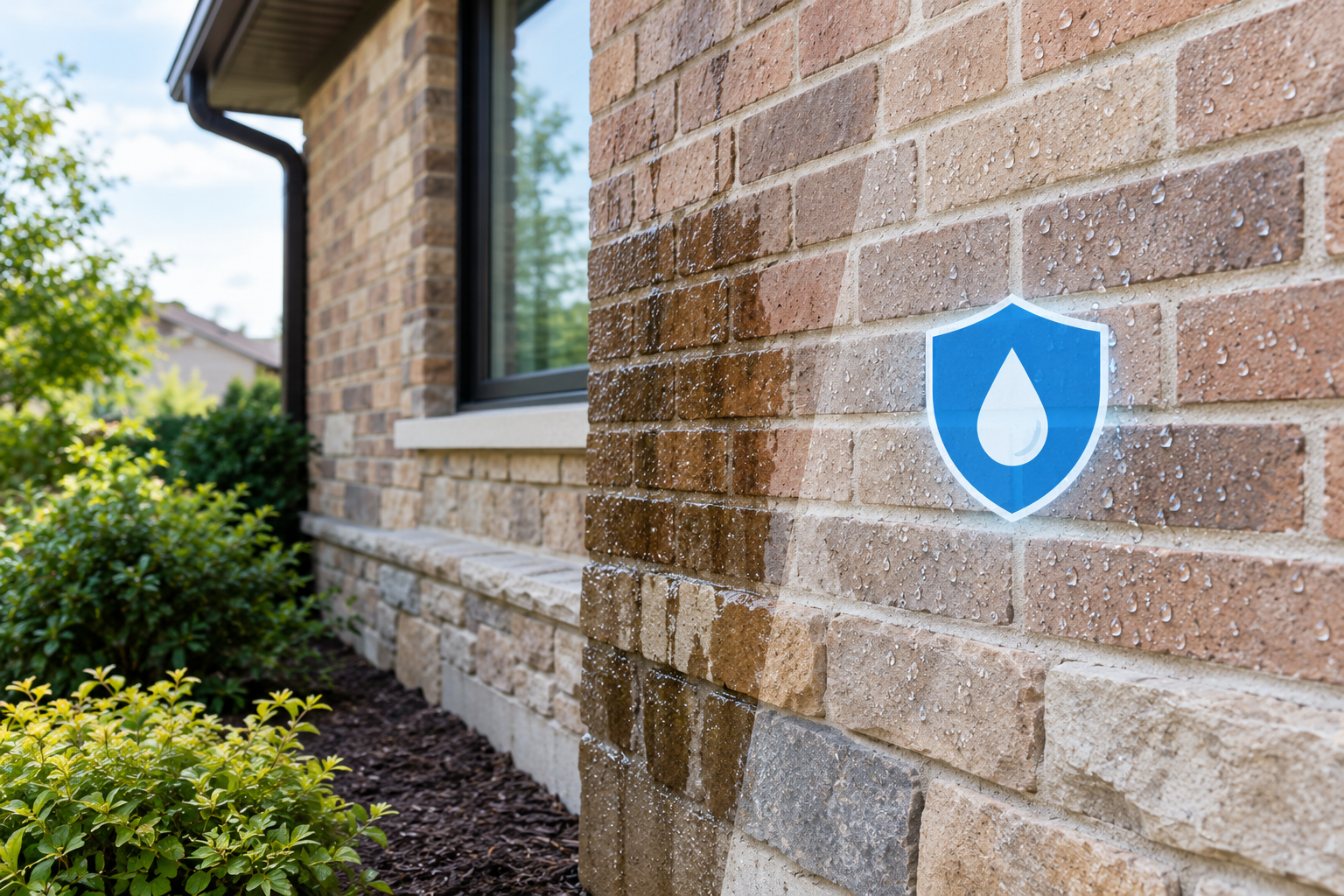
Masonry waterproofing can help protect brick and stone surfaces from rain, moisture, and repeated water exposure, but it is not a simple fix for every moisture problem. Water can enter through damaged mortar, cracks, poor drainage, roof leaks, or worn joints, and these issues may need repairs before any waterproofing treatment is applied. Quality Brickwork starts with finding the source of moisture and checking the condition of the masonry. Choosing the right repair or waterproofing method can help reduce moisture damage and support the long-term condition of your home.
Key Takeaways
Masonry waterproofing can reduce water absorption when the right product is used on suitable masonry. However, coating a wall without fixing the cause of moisture can make damage worse. A good inspection should come first. Homeowners should also look at the condition of the mortar, drainage, roof edges, joints, and other areas that may let water reach the wall.
Waterproofing does not replace masonry repairs.
Some masonry needs a breathable water-repellent treatment.
Damaged mortar and cracks should be repaired first.
Waterproof masonry paint is not right for every brick wall.
Good drainage helps limit moisture damage.
Professional inspection can help identify hidden water entry.
What Is Masonry Waterproofing?
Masonry waterproofing is a process used to reduce the amount of liquid water that can enter brick, block, stone, or other masonry surfaces. Depending on the material, this may involve a water-repellent treatment, repairs to mortar joints, improved drainage, or another method suited to the wall. The goal is not simply to cover the surface. It is to control water while allowing the masonry system to perform as intended.
A masonry wall needs a way to manage moisture. Brick and mortar can absorb water, and moisture can move through small pores and openings. If the wall cannot dry properly, trapped moisture may lead to staining, cracking, surface damage, or other concerns over time.
The National Park Service notes that water is a major cause of masonry deterioration and that moisture can enter through cracks, failed mortar, roof leaks, and other building defects.
Important parts of a sound approach include:
Finding where water enters.
Checking the condition of brick and mortar.
Repairing open joints and cracks.
Improving drainage where needed.
Choosing a suitable breathable treatment when appropriate.
Can Waterproofing Really Protect Brick?
Masonry waterproofing can help limit water absorption, but its success depends on the condition of the wall and the product used. A healthy masonry wall may benefit from a suitable water-repellent treatment in certain situations. However, waterproofing cannot correct structural movement, damaged mortar, poor drainage, or a leaking roof. Those problems need to be addressed at the source.
This is why homeowners should not view waterproofing as a permanent shield that blocks every drop of water. Masonry needs to manage both liquid water and water vapor. A coating that blocks moisture from leaving can sometimes create a new problem inside the wall.
The National Park Service recommends careful assessment before using water-repellent treatments, especially on older masonry. It also warns that coatings applied to damp masonry can trap moisture and contribute to further deterioration.
Before choosing a treatment, check for:
Cracked or missing mortar.
Loose or damaged bricks.
Water stains inside the home.
Poorly working gutters or downspouts.
Open joints around windows and doors.
Moisture coming from the ground.
When Is Waterproof Masonry Paint a Good Choice?
Waterproof masonry paint can sound like an easy answer to a wet wall, but it should not be treated as a universal solution. Paint creates a surface layer, while masonry is a system that may need to release moisture. If the wall is already damp, covering it without finding the cause can hold moisture inside the masonry and increase the risk of damage.
For this reason, the type of coating matters. Some modern water-repellent products are designed to reduce liquid water entry while remaining more vapor permeable than older film-forming coatings. Even these products should be used only when they suit the wall and the moisture problem.
The National Park Service explains that water-repellent coatings can reduce water penetration but may still affect vapor movement. It recommends understanding the source of moisture before applying such treatments.
A homeowner should consider:
Is the wall dry before treatment?
Is the masonry already damaged?
Can moisture escape from the wall?
Is the product made for this type of masonry?
Has the source of water been repaired?
Signs Your Masonry May Have a Moisture Problem
Moisture damage does not always appear as a large leak. It can start with small signs that become more noticeable over time. White powder on brick, peeling surfaces, dark stains, cracked mortar, and crumbling areas can all point to moisture movement. Some signs may also come from other causes, so an inspection is useful before deciding what repair is needed.
Look around the exterior and interior of the home for:
White or chalky deposits on brick.
Dark or damp-looking masonry.
Crumbling mortar joints.
Cracks through brick or mortar.
Peeling or flaking surface coatings.
Musty areas near masonry walls.
Water marks around windows or doors.
The National Park Service describes efflorescence as a visible sign of salts carried by water through masonry. If moisture and salts remain inside porous materials, they can contribute to surface deterioration and spalling.
Why Mortar Repairs Matter Before Waterproofing
Mortar joints are an important part of a masonry wall. When mortar becomes cracked, loose, or missing, water has more paths into the wall. Adding a coating over these areas does not repair the damaged joint. In many cases, the better first step is to repair the masonry and restore the joints before considering a water-repellent treatment.
This work may involve repointing, where deteriorated mortar is removed and replaced with compatible mortar. The replacement material should suit the existing masonry. Using a mortar that is too hard can create additional stress and contribute to brick deterioration.
The National Park Service explains that mortar is meant to work as part of the masonry system and should generally be compatible with the surrounding brick or stone.
Before waterproofing, look for:
Missing mortar.
Deep cracks in joints.
Loose sections.
Damaged brick edges.
Open joints near windows.
Water entry around wall openings.
For broader exterior work, homeowners may also consider professional Brickwork services when damaged masonry needs repair rather than just surface treatment.
How Drainage Helps Prevent Moisture Damage
Good drainage is one of the simplest ways to protect masonry. Water that collects against a wall can keep the masonry wet for long periods. Gutters, downspouts, grading, and surface drainage all play a role in moving water away from the home. If these systems are not working, waterproofing alone may not solve the problem.
Water can also reach masonry from above. Damaged roof edges, clogged gutters, poor flashing, and open joints can allow rain to travel down the wall. Fixing these areas can reduce moisture exposure before a coating is even considered.
A basic exterior check should include:
Gutters and downspouts.
Roof edges and flashing.
Ground slope near walls.
Drainage around patios and walkways.
Areas where water collects after rain.
Joints around windows and doors.
For homeowners planning larger home remodeling work, drainage should be considered early. Exterior changes can affect how water moves around the property.
Does Waterproofing Prevent All Masonry Damage?
No. Masonry waterproofing can reduce certain forms of water entry, but it cannot prevent every type of masonry damage. Brick walls can still develop cracks from movement, temperature changes, foundation movement, impact, poor construction, or aging. Mortar can also deteriorate even when the wall receives a water-repellent treatment.
Waterproofing also cannot repair an underlying structural problem. For example, a wall that is moving or settling may continue to crack after a coating is applied. Covering the crack may only hide the visible symptom.
Homeowners should watch for:
Stair-step cracks.
Long horizontal cracks.
Bulging walls.
Leaning masonry.
Loose bricks.
Large areas of spalling.
Repeated cracking after repairs.
The National Park Service recommends inspecting masonry for cracking, spalling, bowing, leaning, and mortar deterioration.
When Should a Professional Inspect the Masonry?
A professional inspection is useful when the cause of moisture is not clear or when damage goes beyond a small surface mark. A trained contractor can look at the wall as a complete system instead of focusing only on the visible stain or crack. This can help prevent homeowners from paying for a coating that does not address the real cause.
An inspection is especially important when moisture keeps returning after cleaning or minor repairs. Repeated problems may point to drainage, flashing, mortar failure, or another source that needs attention.
Consider getting an inspection when you notice:
Recurring water stains.
Large or growing cracks.
Loose or falling masonry.
Extensive mortar damage.
Spalling brick.
Moisture inside the home.
Water entering after heavy rain.
If you are unsure whether a wall needs a coating or repair, it is better to identify the cause first. The National Park Service masonry preservation guidance provides useful information about moisture, coatings, and masonry maintenance.
How Masonry Waterproofing Fits Into Home Maintenance
Masonry waterproofing should be viewed as one part of a larger maintenance plan. A wall lasts longer when water is controlled, damaged joints are repaired, drainage works properly, and small defects are addressed before they grow. Regular inspections can also help homeowners notice changes before they become expensive repairs.
A simple maintenance routine can include:
Inspecting masonry once or twice a year.
Checking after major storms.
Cleaning gutters and downspouts.
Looking for new cracks.
Checking mortar joints.
Watching for water stains.
Repairing small defects early.
Other exterior projects can also affect masonry. Driveway Paving, for example, may change the way water moves around a property if grading is altered. Similarly, Retaining Walls should be planned with drainage in mind because water pressure can affect their performance.
What Happens If Moisture Problems Are Ignored?
Small moisture problems can become more serious when they remain untreated. Water can move through cracks and open joints, carry salts into porous materials, and contribute to deterioration. In cold climates, water that enters porous masonry can freeze and expand, adding stress to the material. Repeated wetting and drying can also weaken damaged areas.
The result may include:
Crumbling mortar.
Spalling brick.
Surface staining.
Damaged interior finishes.
Loose masonry units.
Larger repair needs.
The National Park Service has documented how water intrusion can damage masonry and mortar over time. Its preservation guidance stresses the importance of controlling moisture and repairing defects that allow water to enter.
Is Masonry Waterproofing Worth It?
Masonry waterproofing can be worthwhile when it is part of the right repair plan. It may help reduce water absorption and protect suitable masonry from repeated exposure. However, it should not be used to cover up damaged mortar, cracks, poor drainage, or other sources of water entry.
The best approach is to inspect the wall first and then choose the repair method based on the material and cause of the moisture. In some cases, simple maintenance or repointing may be more important than applying a coating.
Keep these points in mind:
Waterproofing is not a replacement for repairs.
The masonry should be assessed before treatment.
Breathability matters when selecting a product.
Water should be directed away from the wall.
Damaged joints should be repaired.
Recurring moisture needs further investigation.
Final Thoughts on Protecting Your Masonry
Masonry waterproofing can help protect your home, but the best results come from addressing moisture at its source. A good plan may include masonry repairs, improved drainage, compatible materials, and a suitable water-repellent treatment when needed. The goal is not simply to seal a wall. It is to keep water under control while allowing the masonry to remain in good condition.
If you are seeing cracks, staining, crumbling mortar, or other signs of moisture, do not wait for the damage to spread. Contact Onyx Home Improvement LLC to discuss your masonry and exterior repair needs and determine the right next step for your home.