
- Home
- Services
- Driveway Paving
- Paver Driveways
Masonry
Paver Driveway Installation
A paver driveway is the one surface that can be repaired without leaving a mark. Individual units lift out and go back — after a utility trench, an oil spill, or a settled area — which is why a paver drive twenty years on can still look like the day it was laid.
5-year workmanship warranty
In writing, on every job we install.
- 5 years Paver patios, driveways, and walkways
Also under Driveway Paving: Asphalt DrivewaysConcrete DrivewaysDriveway Paving overview
Patterns, borders, and inlays
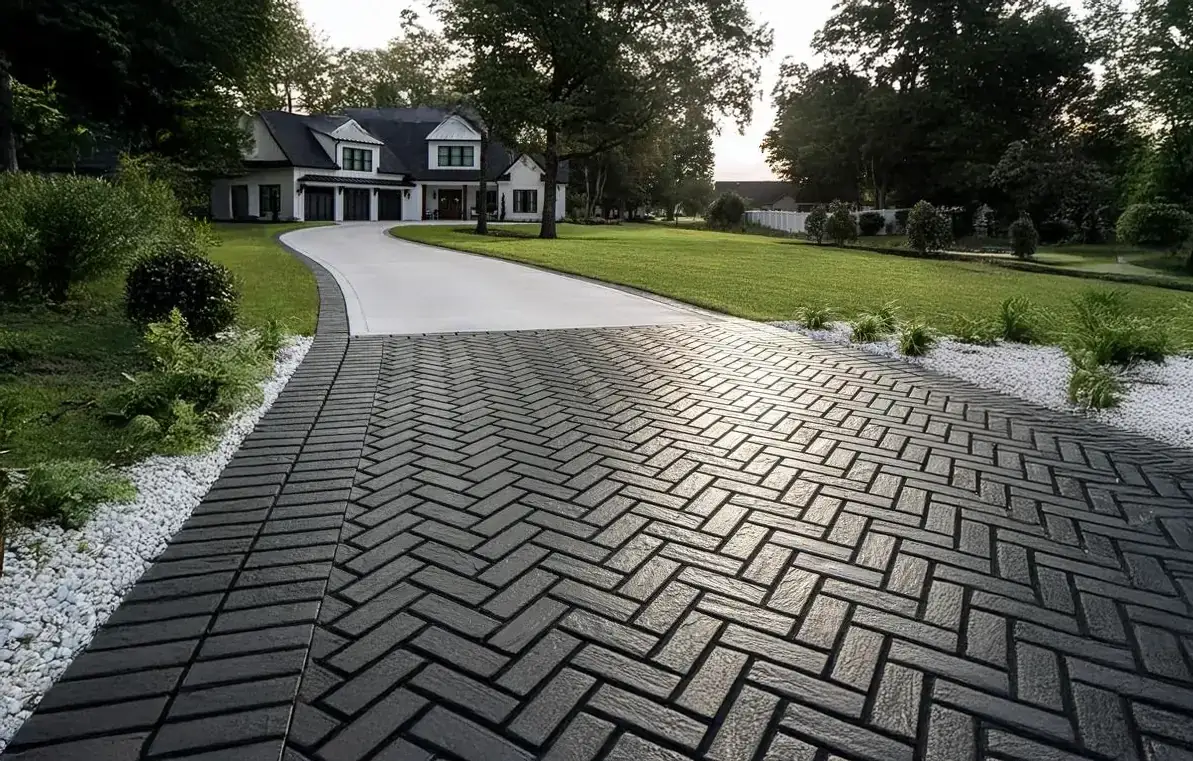
The pattern does real work on a surface this large. Herringbone is the strongest bond you can lay, because every unit locks against its neighbours in two directions and load spreads rather than concentrating — it is the right choice anywhere vehicles turn or brake. Running bond is calmer and pulls the eye toward the house.
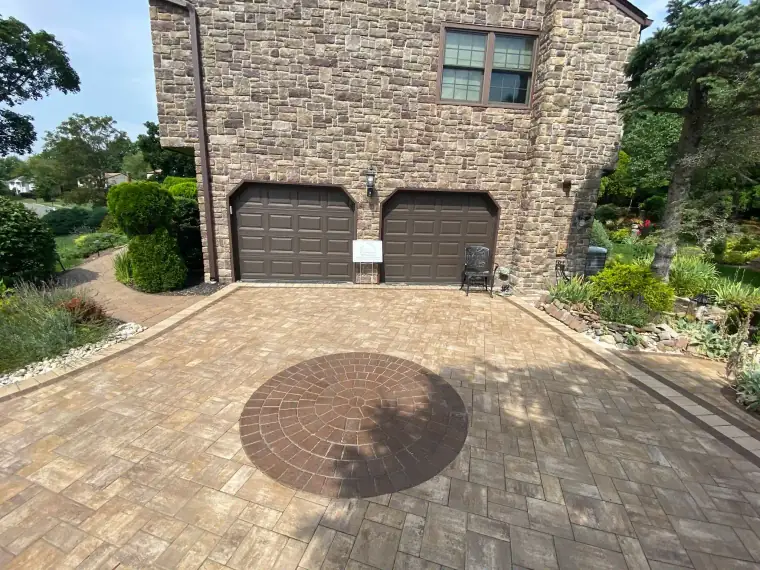
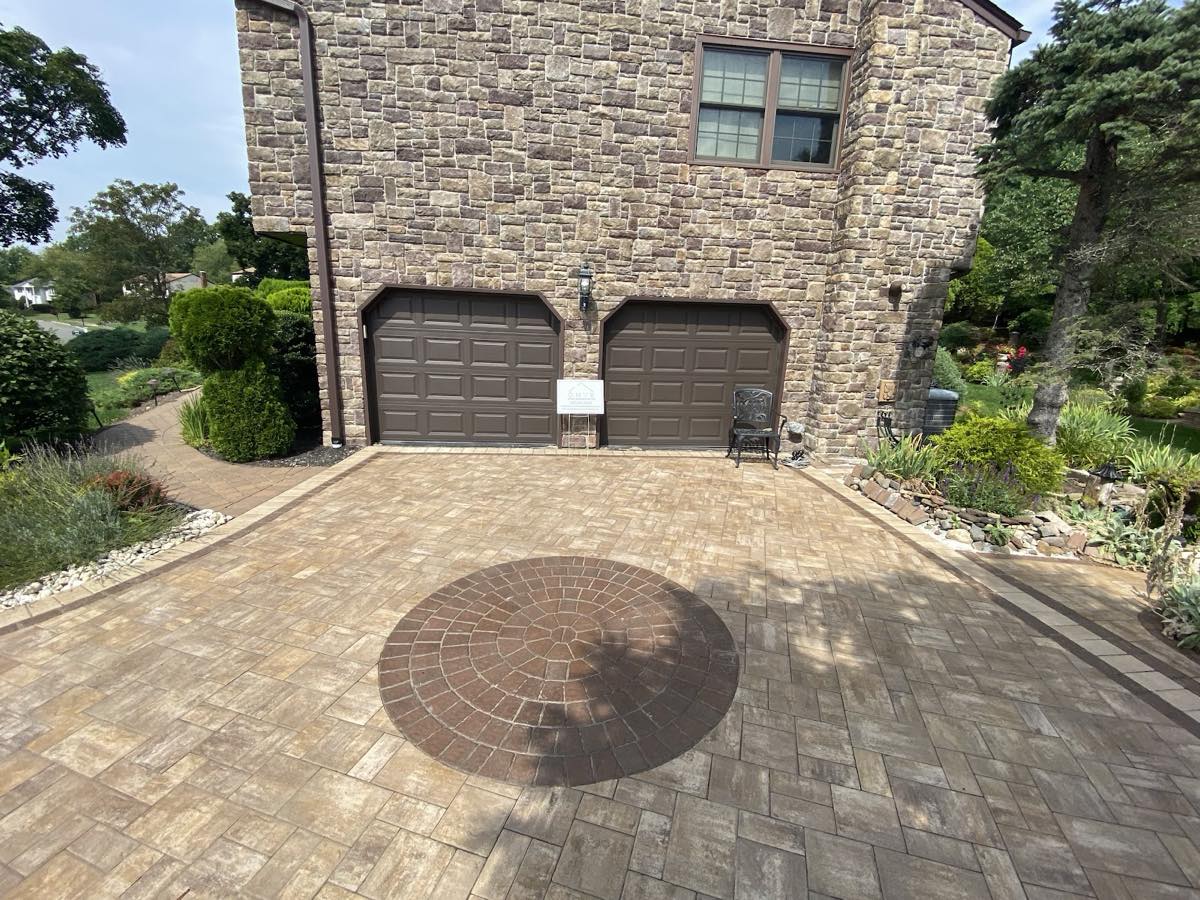
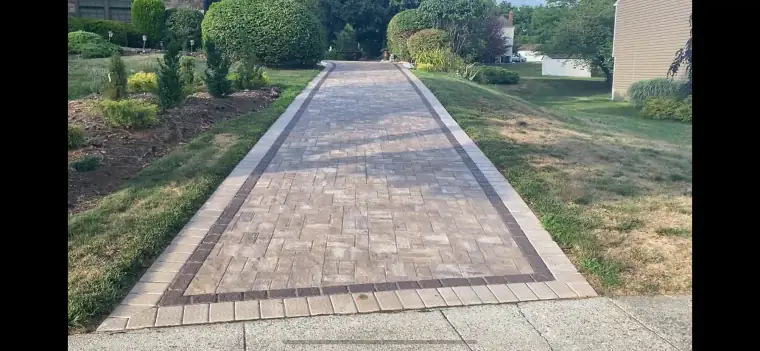
A soldier course around the perimeter is not decoration: it locks the field and gives the driveway a deliberate edge against the lawn. Banding across the width breaks up a long run, and a circular medallion set on axis with the garage doors gives a wide apron a centre instead of leaving it as an expanse of paving.
Why the base is deeper than you expect
The pavers are the least important part of a paver driveway. Under them sits a bedding layer, and under that a compacted aggregate base built considerably deeper than the one beneath a patio, because a car concentrates several thousand pounds into four small contact patches and the base is what spreads that out.
It is compacted in lifts rather than all at once, because a thick layer compacted from the top is dense at the top and loose underneath. This is the part of the job nobody photographs and the only part that cannot be corrected later.
Materials that suit the house
Concrete pavers come in tumbled, smooth, and textured faces and in a range of formats, from small cobble units to large-format slabs. Clay brick pavers hold their colour permanently because the colour is the fired clay itself rather than a pigment, which is why a brick drive laid beside a brick house still matches decades later.
We choose against the house — its brick, its stone, its roof — and we deliberately avoid an exact match, which flattens both surfaces. Picking up a tone rather than copying it is what makes new paving look like it belongs.
Living with a paver driveway
Very little maintenance, and what there is is simple. Sweep it. Top up the joint sand every few years where it has washed low. Pull the occasional weed from the perimeter. Sealing is optional and mostly cosmetic — it deepens the colour and helps against oil — and it is not required for the surface to perform.
Snow clearing is no different from any other driveway, though a plough blade should be run with a shoe or a rubber edge so it rides over the surface rather than catching a raised unit.
How the work runs
Paver Driveways, step by step
Every job follows the same sequence. You are told which stage you are at and what happens next.
Design and material selection
Pattern, colour, border, and any inlay are settled first, against the house rather than against a brochure. A driveway is the largest single surface on most properties and it sets the tone for everything else.
Excavation
Dug out considerably deeper than a patio would be. A driveway carries vehicle loads, and the depth of the base is what carries them.
Base and compaction
Aggregate in lifts, each one compacted before the next goes on. This is the whole job. Everything visible sits on top of it.
Grading
Pitch set across the finished level so water leaves the surface and travels away from the garage and the house.
Bedding and laying
A screeded bedding layer, then units set to the pattern, worked off the laid field so the courses stay true.
Cutting and bordering
Perimeter cuts are made to fit rather than filled with slivers, and the soldier course or border is set to lock the field.
Edge restraint, jointing, compaction
Edge restraint is installed, joint sand is swept in, the field is plate-compacted, and the joints are topped and compacted again.
Recent work
Paver Driveways projects
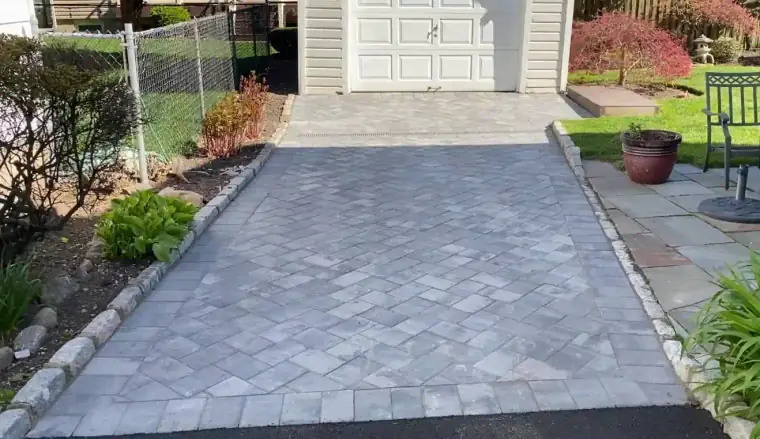
Recent paver driveways jobs, each with its own page. Photographs are our own work.
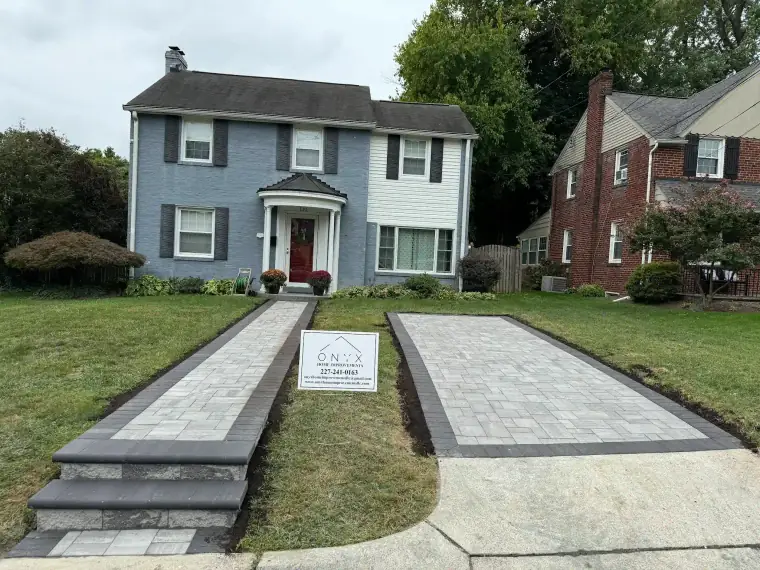
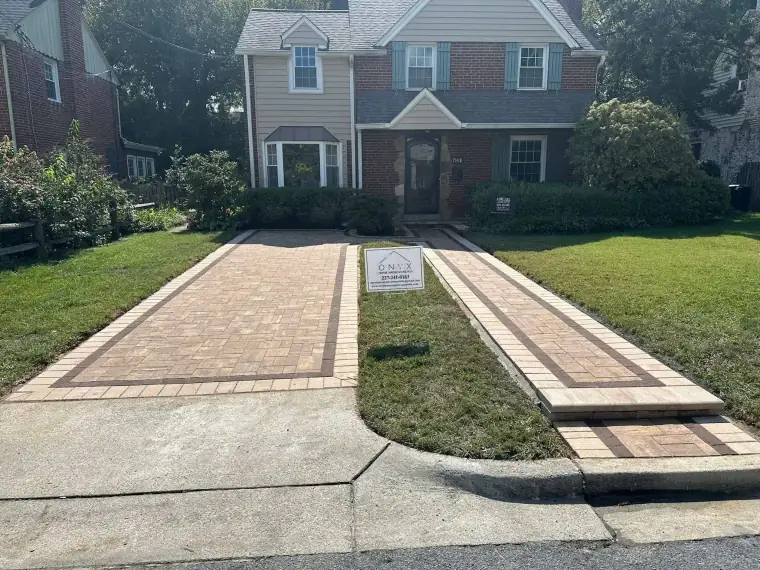
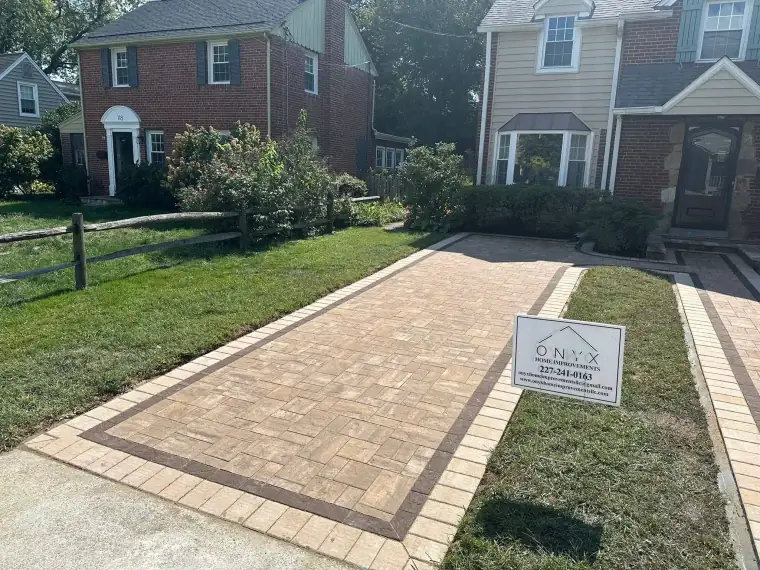
Paver Driveways photographs
★★★★★
Our work with Onyx was amazing. Our front stoop, walkway, driveway and back areas were a mess. Together we planned, worked, and accomplished amazing things. The team and work crew were very respectful and willing to listen to and address any and all concerns that we had. We are very pleased with their work.
Questions
Frequently asked
Are paver driveways strong enough for vehicles?
Yes — interlocking concrete pavers are used on port aprons and bus lanes, which are considerably harder duty than a family car. The strength comes from two things: the units interlock so load spreads sideways into neighbouring pavers instead of punching straight down, and the base under a driveway is built deeper than the base under a patio.
What matters is that it was built as a driveway. A paver surface laid on a patio-depth base will rut where the wheels sit, and no paver can compensate for that.
Will weeds grow between the pavers?
Some, eventually, and not from below. Weed seed blows in and germinates in the joint sand at the surface. Polymeric jointing sand, compacted in properly, largely prevents it and is what we use as standard. A few volunteers a year at the edges is normal and pulls out by hand.
What happens if a paver gets stained or damaged?
You replace that paver. This is the real advantage of the material and the reason it holds its value: an oil stain, a cracked unit, or a utility trench across the drive is a repair that lifts out and goes back invisibly. The same events on asphalt or concrete leave a patch you will look at for the rest of the time you own the house.
We leave you spare units from the same batch when we finish, so a future repair matches rather than approximately matches.
Do paver driveways sink or shift?
A properly built one moves very little. Settling comes from a base that was not compacted in lifts, from a base that was not deep enough for vehicle loads, or from water travelling under the surface because the grade sends it the wrong way. All three are decided before a single paver is laid.
When a paver drive does settle, the fix is genuinely a fix: the field is lifted, the base corrected and recompacted, and the same units reset. You rarely need new material.
How much more do pavers cost than asphalt?
Meaningfully more up front — the excavation is deeper, the base is heavier, and the units are set by hand one at a time. Over twenty years the gap narrows, because pavers do not need resurfacing and repairs do not leave scars. We price both against your actual driveway so you are comparing real numbers rather than averages.
Also from Onyx
Driveway Paving
Asphalt, concrete, and paver driveways across Northern Virginia and DC. Base prep done right, every layer laid the way it should be.
Asphalt Driveways
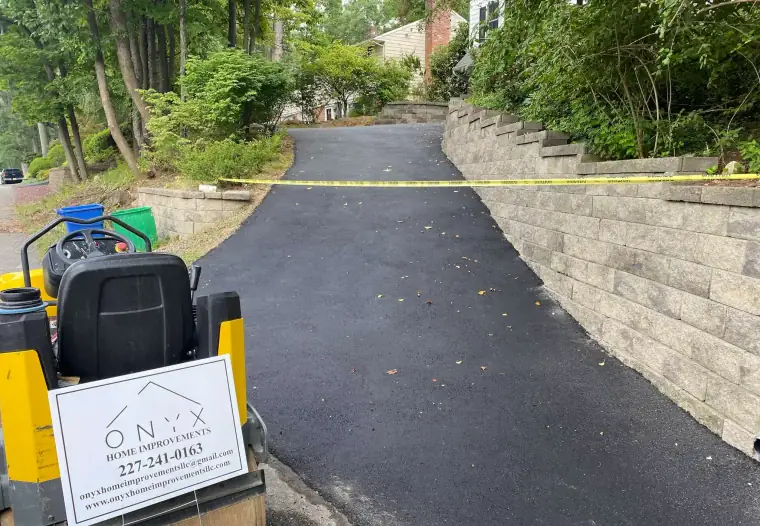
New asphalt driveways and full replacements. Torn out to depth, rebuilt on a compacted base, laid in lifts and rolled hot.
Concrete Driveways
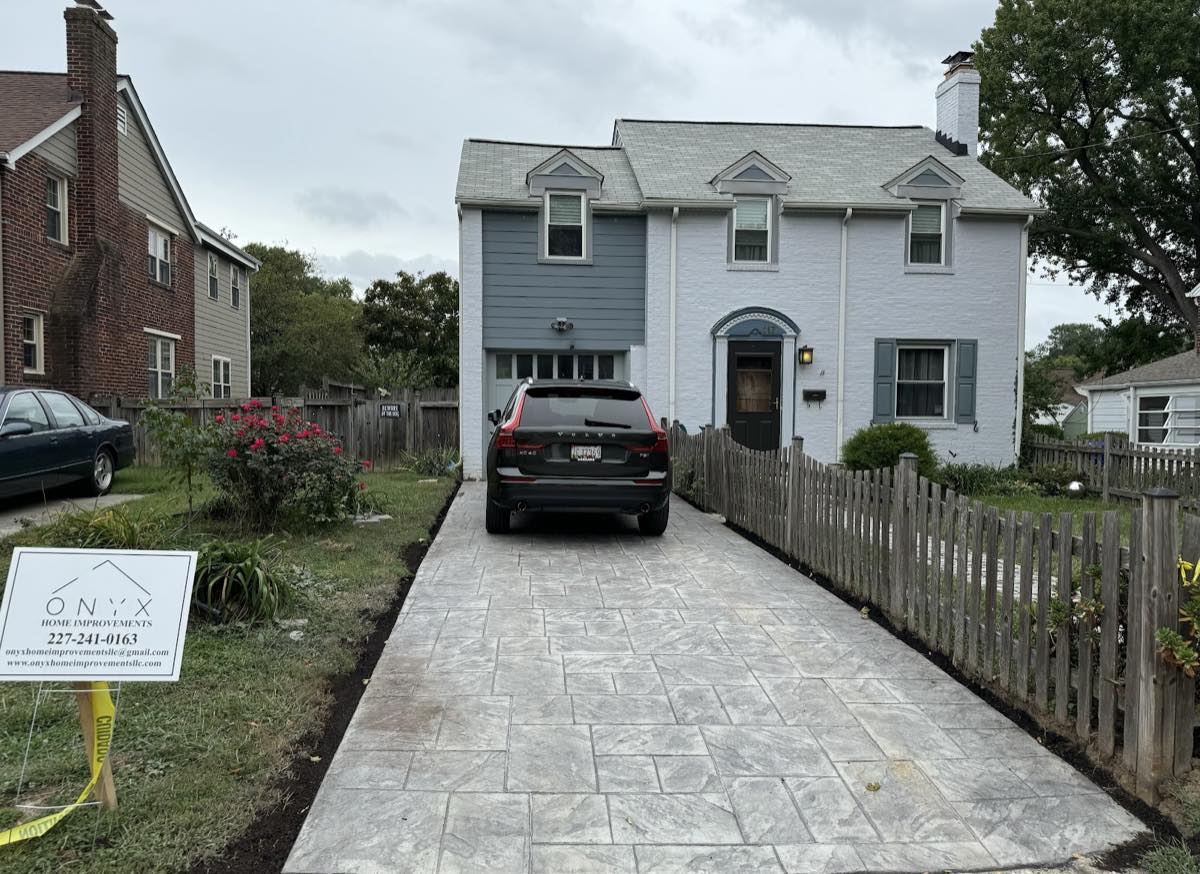
Poured concrete driveways in broom, exposed aggregate, and stamped finishes — reinforced, jointed properly, and graded to drain.
Service area
Estimates are free everywhere on this list. If you are just outside it, call and ask — we often can.