
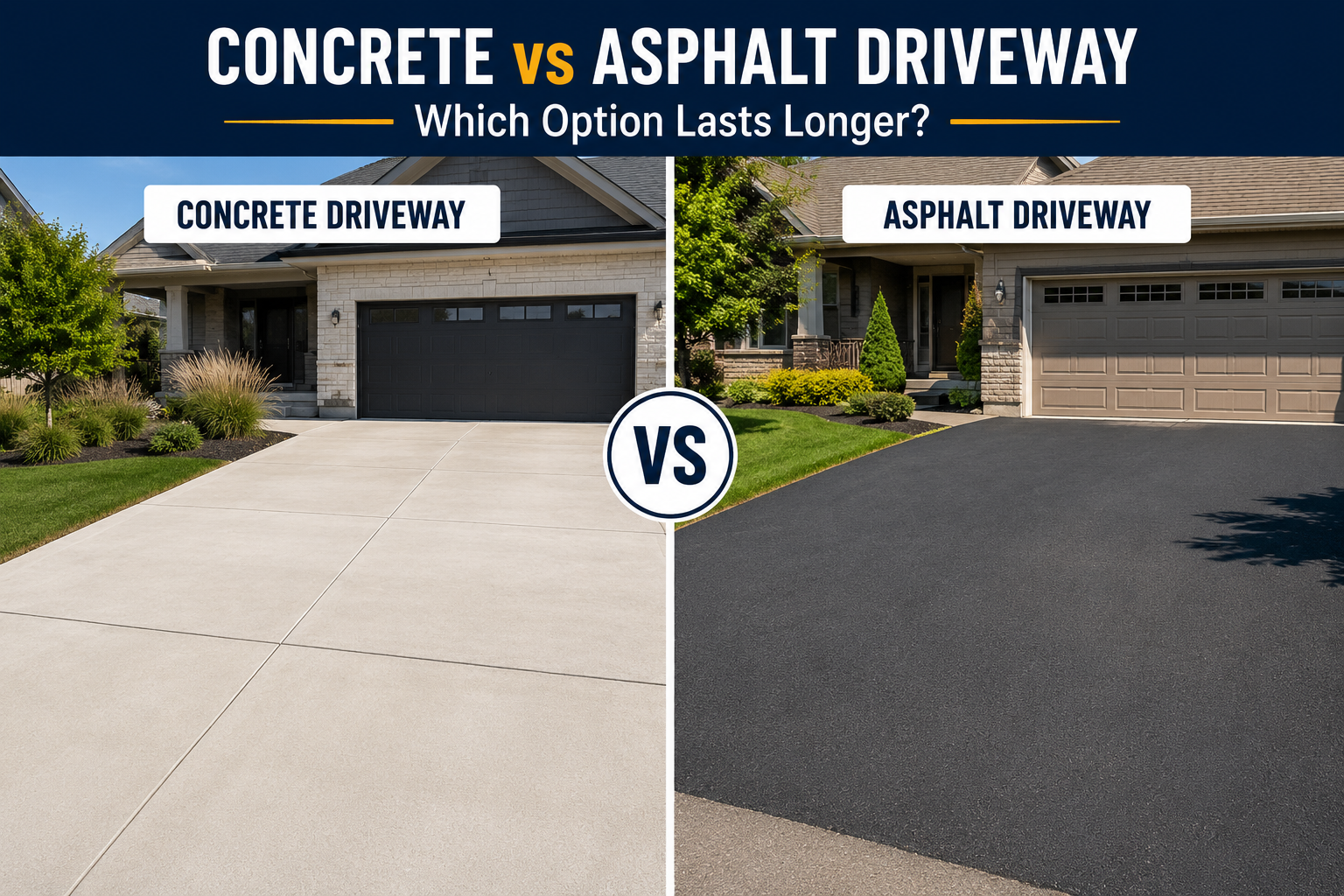
Concrete vs asphalt driveway options differ in cost, lifespan, maintenance, appearance, and performance. Choosing the right surface can make a major difference in how your driveway looks and performs over time. For homeowners planning exterior upgrades or home remodeling, understanding these differences can make the decision easier.
Both materials can provide a strong and useful driveway when they are installed on a properly prepared base. However, local weather, drainage, traffic, and maintenance habits can affect how long either surface lasts.
Key Takeaways
Concrete and asphalt can both be good choices for a residential driveway. The better option depends on your budget, property conditions, appearance preferences, and maintenance expectations.
Concrete generally offers a longer potential service life.
Asphalt usually has a lower initial installation cost.
Both materials need proper base preparation.
Drainage can affect driveway performance.
Asphalt can be easier to repair in some cases.
Concrete offers more options for finishes and designs.
Regular maintenance can help extend the life of either surface.
How Do Concrete and Asphalt Differ?
Concrete and asphalt are both common paving materials, but they perform in different ways. Concrete uses cement as its main binder, while asphalt uses a petroleum-based binder mixed with aggregate.
These materials respond differently to heat, cold, moisture, and traffic. The choice should therefore consider more than the appearance of the finished driveway.
Key differences include:
Initial cost: Asphalt often costs less to install.
Lifespan: Concrete can generally last longer with proper care.
Maintenance: Asphalt usually needs periodic sealing.
Appearance: Concrete offers many finish and design choices.
Repairs: Both can develop cracks and surface damage.
Weather response: Temperature changes affect each material differently.
How Long Can Each Surface Last?
Driveway lifespan depends on several factors, so there is no single number that applies to every property. Installation quality, soil, drainage, traffic, weather, and maintenance all have an effect.
A properly installed concrete driveway can often have a longer service life than asphalt. Asphalt can also provide many years of use when the base is stable and the surface receives regular care.
Factors that influence lifespan include:
Quality of the base.
Soil stability.
Drainage.
Vehicle weight and traffic.
Freeze-thaw cycles.
Water exposure.
Maintenance.
Quality of installation.
The surface material matters, but the work underneath it matters just as much.
What Makes Concrete a Strong Choice?
Concrete is known for its strength and long-term durability. It can handle regular residential traffic and offers a clean appearance that works with many home styles.
One major benefit is design flexibility. Concrete can be finished in different ways, including smooth, textured, stamped, or decorative surfaces.
Other advantages include:
Long potential service life.
Strong load-bearing performance.
Low routine maintenance.
Wide range of finish options.
Light-colored surface that can complement landscaping.
Good resistance to normal residential traffic.
Concrete can be a good choice for homeowners who want a durable driveway and are willing to make a higher initial investment.
What Are the Benefits of Asphalt?
An asphalt driveway can be an attractive option for homeowners who want a practical surface with a lower starting cost. Asphalt has a dark appearance and can provide a smooth driving surface when properly installed.
It also has some flexibility, which can help it respond to normal ground movement.
Common benefits include:
Lower initial installation cost in many cases.
Smooth driving surface.
Faster installation and use in many projects.
Easier spot repairs in some situations.
Dark appearance that can complement many properties.
Some flexibility under changing ground conditions.
However, asphalt needs regular maintenance to help protect it from water and weather exposure.
Which Material Costs More?
The total cost of a driveway depends on its size, site conditions, preparation, material, labor, drainage, removal of an existing driveway, and other project requirements.
In many residential projects, asphalt has a lower initial cost than concrete. However, the cheaper installation price does not always mean the lowest long-term cost.
When comparing estimates, consider:
Material cost.
Site preparation.
Removal of the existing surface.
Drainage work.
Base preparation.
Labor.
Sealing or maintenance.
Expected replacement timeline.
A driveway should be evaluated based on both upfront cost and long-term use.
How Much Maintenance Does Each Need?
Both surfaces benefit from regular care. Maintenance can help catch small problems before they become larger and more expensive.
Asphalt often needs periodic sealing to help protect the surface. Concrete generally does not require the same type of routine sealing schedule, although maintenance may still be useful depending on the finish and local conditions.
Basic maintenance includes:
Keeping the surface clean.
Removing standing water.
Checking drainage.
Repairing cracks when needed.
Addressing surface damage early.
Avoiding unnecessary heavy loads.
Keeping nearby vegetation under control.
Regular inspections are especially helpful after severe weather or major seasonal changes.
How Does Weather Affect the Choice?
Weather plays an important role in driveway performance. Temperature changes, moisture, snow, ice, and repeated freeze-thaw cycles can place stress on paving materials.
Water is also a major concern. When water enters cracks or reaches the base, it can contribute to movement and damage.
Homeowners should consider:
Average seasonal temperatures.
Freeze-thaw cycles.
Snow and ice exposure.
Rainfall and drainage.
Direct sunlight.
Soil movement.
Winter maintenance practices.
Neither material is automatically the best for every climate. The installation method and drainage system should match local conditions.
Why Base Preparation Matters
A driveway is only as stable as the ground supporting it. If the base is poorly prepared, even a high-quality surface can crack, settle, or develop uneven areas.
Before paving, the site may need excavation, grading, compaction, and a properly prepared aggregate base. The exact requirements depend on soil and site conditions.
Good preparation can help:
Reduce settlement.
Improve drainage.
Support vehicle loads.
Limit uneven movement.
Reduce moisture-related damage.
Improve the overall lifespan of the driveway.
This is why driveway paving should be approached as a complete system rather than simply placing a surface over existing soil.
What About Cracks?
Cracks can occur in both concrete and asphalt. The cause and pattern of the cracking are more important than simply seeing a crack.
Small cracks may be related to normal aging or minor movement. Larger or repeated cracks can point to drainage, soil, base, or structural problems.
Pay attention to:
Crack size and length.
Whether cracks are spreading.
Repeated cracking in the same location.
Areas that are sinking.
Water collecting near cracks.
Cracks along driveway edges.
Sections that appear uneven.
Early repair can help prevent water from entering deeper parts of the driveway.
Which Surface Looks Better?
Appearance is a personal choice, but each material creates a different look. Asphalt has a simple, dark finish that can work well with many homes. Concrete provides more options if you want a decorative or custom appearance.
Concrete can be:
Stamped.
Textured.
Brushed.
Colored.
Finished with decorative patterns.
Asphalt generally offers fewer decorative options but has a clean and traditional appearance.
Consider the style of your home, landscaping, walkways, and other exterior features when choosing a surface.
Which Option Is Easier to Repair?
Repair needs depend on the type and location of the damage. Small problems can sometimes be addressed without replacing the entire driveway.
Asphalt can be relatively easy to patch in some situations. Concrete repairs may involve filling cracks, replacing damaged sections, or addressing the underlying cause.
Repair decisions should consider:
The size of the damaged area.
Cause of the damage.
Age of the driveway.
Condition of the surrounding surface.
Drainage.
Base stability.
If damage keeps returning after repairs, the underlying problem should be investigated rather than repeatedly treating the surface.
How Does Driveway Design Fit Into Other Projects?
A driveway is part of the home's exterior, so its design should work with other improvements. The driveway location can affect drainage, landscaping, walkways, entrances, and outdoor living areas.
When planning home remodeling services, consider the entire exterior layout rather than choosing a driveway surface in isolation.
You may also want to coordinate:
Walkways.
Retaining walls.
Landscaping.
Garage access.
Drainage.
Exterior lighting.
Entry areas.
A coordinated design can make the property look more complete while helping each feature work properly.
Concrete vs Asphalt: Quick Comparison
The following comparison provides a simple overview of the main differences.
Factor | Concrete | Asphalt |
|---|---|---|
Initial cost | Usually higher | Usually lower |
Potential lifespan | Generally longer | Generally shorter |
Maintenance | Lower routine needs | Regular sealing may help |
Appearance | Many design choices | Simple, dark finish |
Repair | Can require section repair | Patching is often practical |
Installation | Requires curing time | Often ready sooner |
Weather response | Strong but can crack | Flexible but can soften in heat |
Actual performance depends on installation quality, site conditions, climate, and maintenance.
How to Choose the Right Driveway
There is no universal winner. The right material depends on what matters most to you and what your property can support.
Concrete may be a better fit if you prioritize:
Long-term durability.
Design flexibility.
Lower routine maintenance.
A custom appearance.
Asphalt may be a better fit if you prioritize:
Lower initial cost.
A simple appearance.
A smooth driving surface.
Easier maintenance and patching.
The condition of the existing site should also be reviewed before a final decision is made.
What Should You Ask Before Installation?
Getting clear answers before construction can help you compare contractors and understand the full project scope.
Ask about:
Base preparation.
Drainage.
Material thickness.
Expected maintenance.
Warranty coverage.
Removal of the existing driveway.
Project timeline.
Repair options.
Total project cost.
Do not compare estimates based only on the price shown at the bottom. A lower estimate may leave out important preparation or drainage work.
Planning a New Driveway
A new driveway is a long-term investment, so planning should start with the property itself. Look at water flow, soil, slope, traffic, and the condition of the existing surface.
For homeowners considering home improvement, choosing the driveway material alongside other exterior work can help create a more consistent property design.
If you are reviewing completed exterior work before planning your own project, explore the Projects section to see examples of previous work.
Final Thoughts
When comparing concrete vs asphalt driveway options, consider more than the initial installation price. Concrete may provide a longer potential service life and more design flexibility, while asphalt can offer a lower upfront cost and a practical driving surface.
The best choice depends on your budget, property conditions, drainage, climate, maintenance plans, and preferred appearance. Most importantly, proper preparation and installation are key to getting good long-term performance from either material.
If you are planning a new driveway or other exterior improvements, contact Onyx Home Improvement LLC to discuss your project and request a free estimate.